
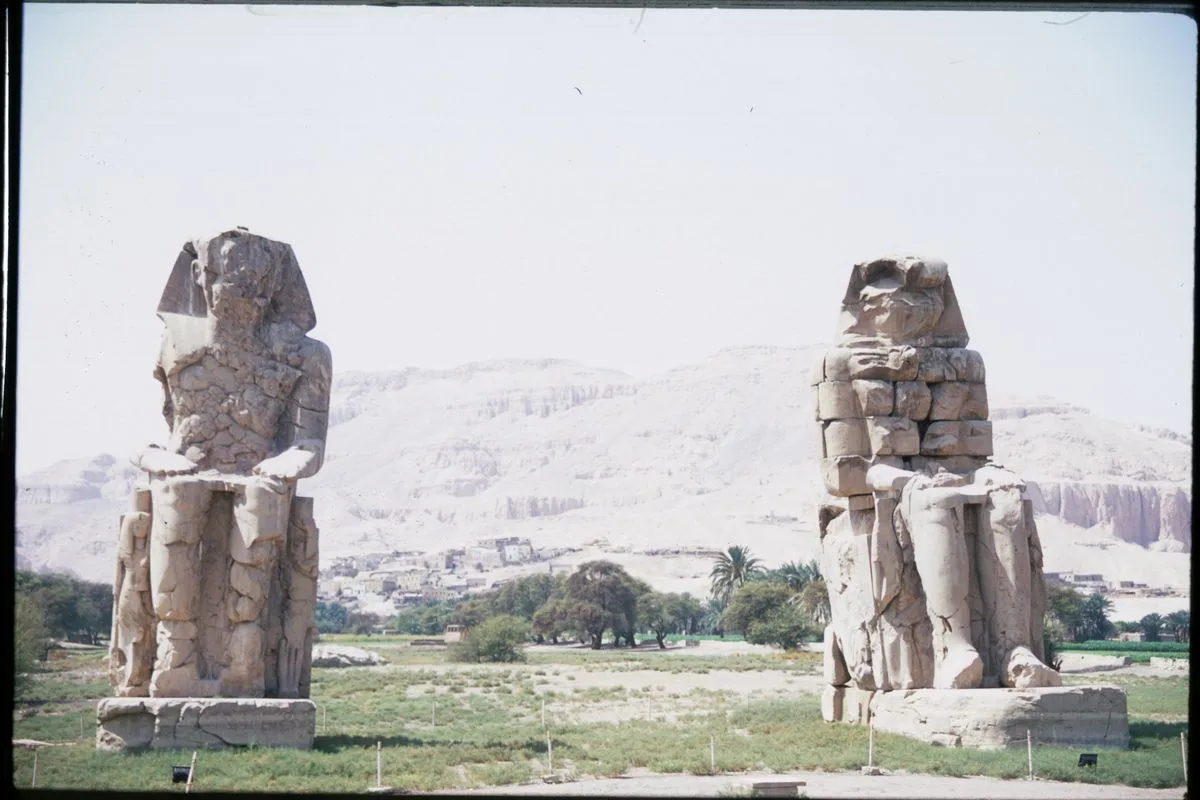
Every West Bank day passes the Colossi of Memnon — two seated giants of Amenhotep III staring over the fields toward the Nile, the last guardians of a vanished temple. It is a five-to-fifteen-minute stop with a story bigger than most museums. Here it is.
Quick Answer: The Colossi of Memnon are two 18-meter quartzite statues of pharaoh Amenhotep III that flanked the entrance of his mortuary temple — once the largest temple complex in Egypt, now almost entirely gone. They stand beside the West Bank road, free to visit, and famous since Roman times for the northern statue’s mysterious dawn “singing”.
- Each colossus weighs roughly 700 tons, quarried near Cairo and hauled 600+ km.
- Greek and Roman tourists came to hear the statue “sing” at sunrise — their graffiti survives on its legs.
- Ongoing excavations keep raising more statues from the lost temple behind.
Table of Contents
The Vanished Temple
Amenhotep III — Tutankhamun’s grandfather — built a mortuary temple here larger than Karnak’s core. Standing in the floodplain, it was ruined within centuries: Nile floods ate the foundations, an earthquake around 1200 BC brought much of it down, and later pharaohs quarried the remains. The two gate colossi were simply too big to move, so they stayed — a doorway to nothing, marking three millennia.
The Singing Statue
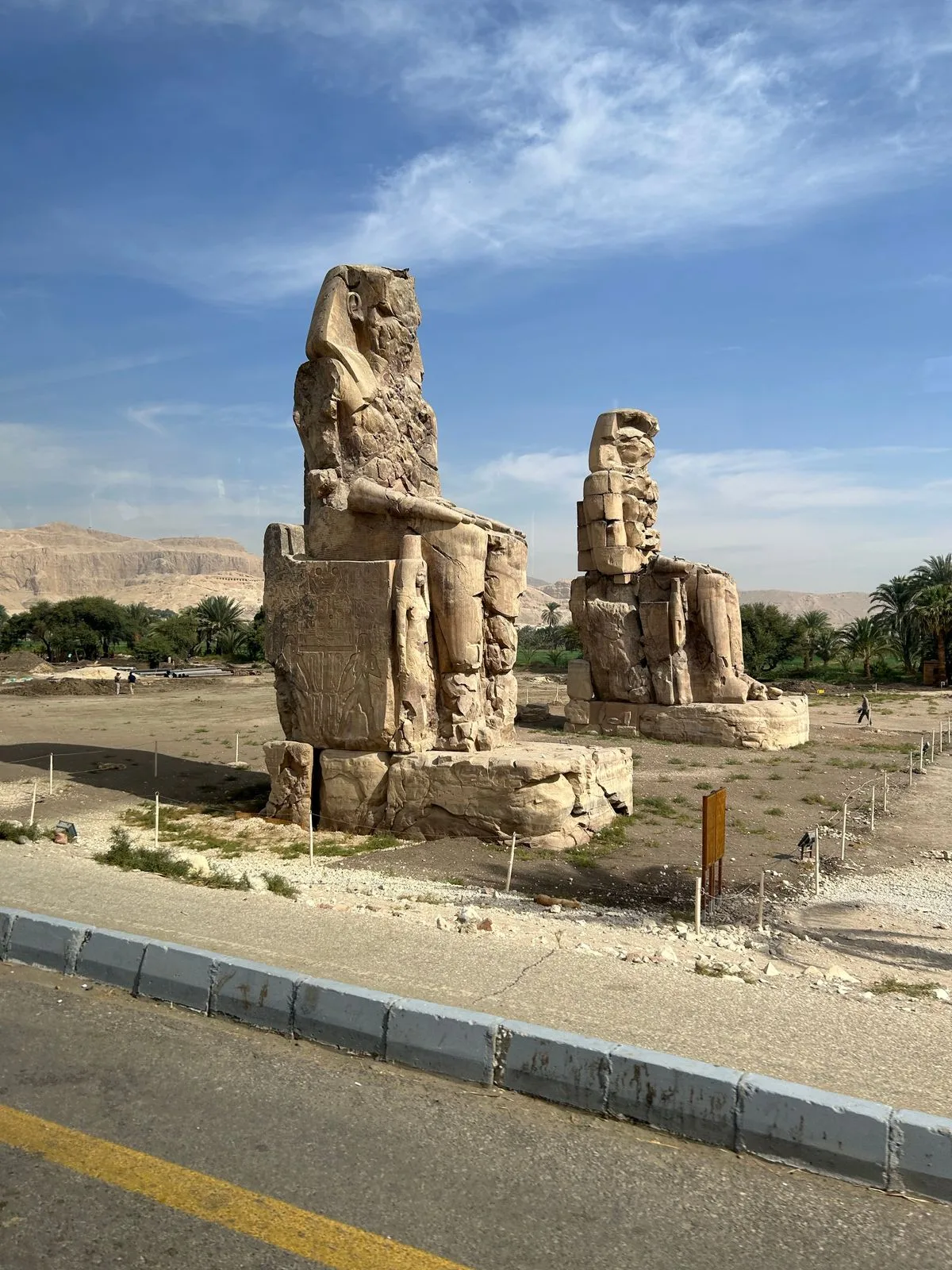
After an earthquake in 27 BC cracked the northern colossus, it began emitting a musical tone at dawn — probably dew and heated air escaping the fractured stone. Greeks identified the statue with Memnon, the Trojan-war hero who greeted his mother the Dawn, and it became a genuine ancient tourist attraction: emperors visited, and dozens of Greek and Latin inscriptions on the legs record who heard the song. When Roman engineers repaired the crack around 199 AD, the singing stopped — the rare case of restoration ruining the show.
Visiting Information
| Detail | What to know |
|---|---|
| Location | Beside the main West Bank road — every itinerary passes it |
| Cost | Free — roadside viewing |
| Time needed | 5–15 minutes |
| Best light | Morning sun on the faces; sunrise for atmosphere |
Look Closer Than the Photo Stop
Details worth your five minutes: the small standing figures of the king’s mother and wife beside the giant legs; the Nile-god reliefs binding the two lands on the thrones’ sides; and behind the fence, newly re-erected statues from the ongoing excavation of the lost temple. Then it is onward — the colossi are the natural first or last stop on the West Bank circuit with the Valley of the Kings and Hatshepsut’s temple.
The Colossi of Memnon guard the entrance to Ancient Thebes, a UNESCO World Heritage Site. Read the official entry at the UNESCO World Heritage Centre.
FAQs About the Colossi of Memnon
Who do the Colossi of Memnon depict?
Pharaoh Amenhotep III — not Memnon; the Greek name stuck from the singing-statue legend.
Why are they called Memnon?
Greek visitors linked the dawn “song” of the cracked northern statue to Memnon greeting his mother Eos, the Dawn.
Do you need a ticket?
No — they stand in the open beside the road.
Is it worth stopping?
Always — it costs minutes, and with the story above, the giants stop being a photo op and become a 3,400-year epic.
Passing them at dawn? That is balloon-day routing — see the sunrise balloon and the full Luxor travel guide.
